Why Are Titanium Products Worth the Investment?
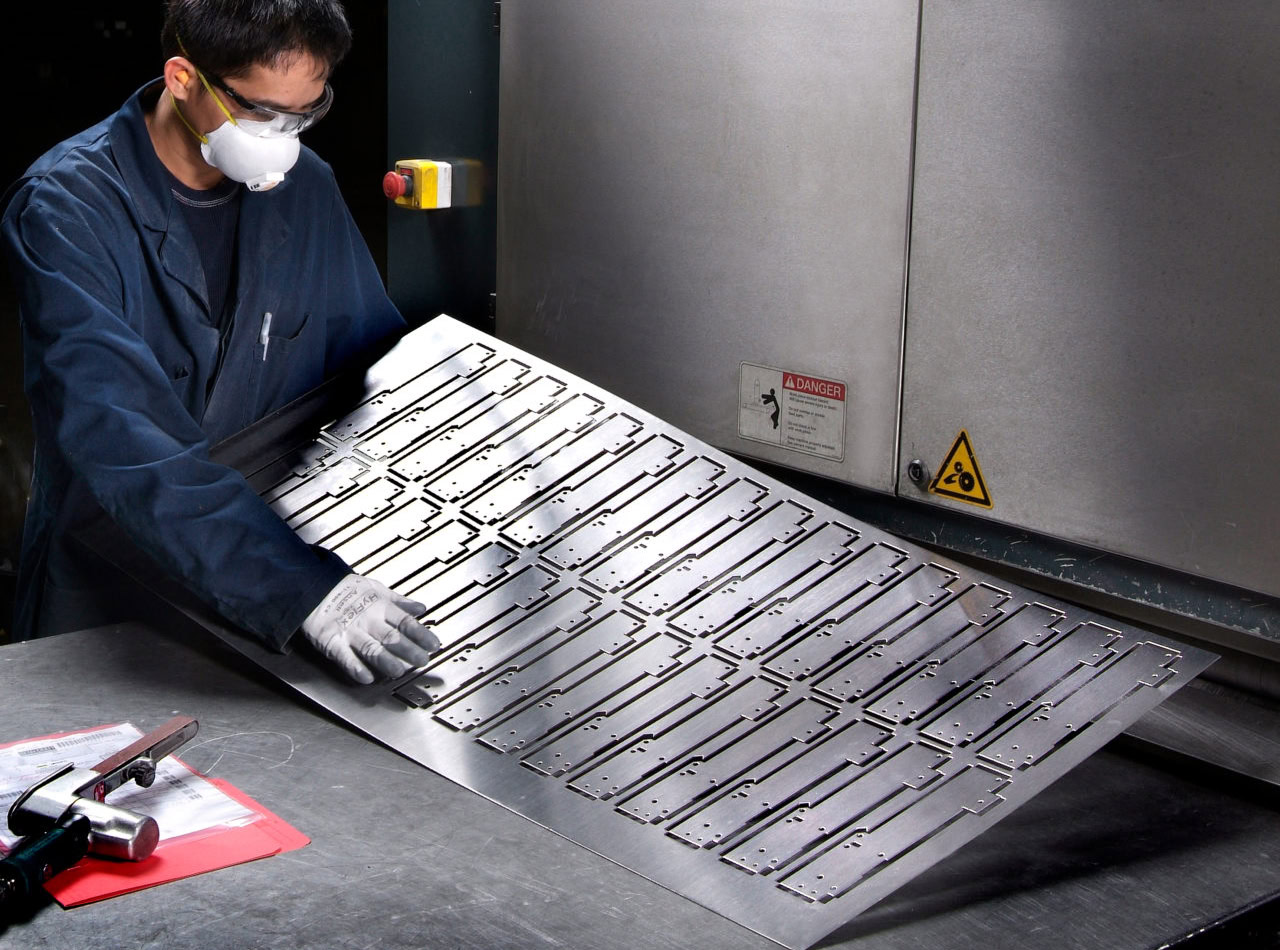
Titanium possesses a strength-to-weight ratio of approximately 275 kN·m/kg, outperforming 304 stainless steel, which sits at roughly 70 kN·m/kg. Beyond its 45% reduction in mass, the material exhibits a self-healing oxide layer, preventing structural degradation in saline environments where other metals experience pitting corrosion within 1,500 hours of salt spray exposure. Integrating wstitanium components into mechanical assemblies reduces long-term maintenance costs by 65% over a 20-year operational lifespan, making it the technical standard for high-performance applications.
Engineers utilize Grade 5 titanium, or Ti-6Al-4V, because its tensile strength reaches up to 1,200 MPa, allowing for thinner, lighter structures without risking mechanical failure. When components undergo cyclic stress, titanium demonstrates a distinct endurance limit where steel might suffer from micro-cracking, maintaining structural integrity across millions of cycles in aerospace testing environments.
The metallurgical stability of titanium stems from its hexagonal close-packed crystal structure, which resists deformation at temperatures exceeding 400 degrees Celsius, unlike aluminum alloys that lose significant yield strength at just 150 degrees Celsius.
Manufacturing titanium requires specialized vacuum arc remelting processes to remove impurities like hydrogen and nitrogen, which can compromise the material's ductility. This precision in production, often involving 3 to 4 remelting cycles, ensures that the final product reaches a purity level of 99.9%, a benchmark verified by industrial spectroscopic analysis of each batch.
| Metal Property | Titanium (Grade 5) | Stainless Steel (316L) |
| Density (g/cm³) | 4.43 | 8.00 |
| Yield Strength (MPa) | 880 | 290 |
| Corrosion Resistance | Exceptional | Moderate |
High costs associated with machining titanium, such as tool wear rates that are 10 times higher than those for carbon steel, are offset by the material’s extended duty cycles. Facilities that transition to titanium components report a 40% reduction in replacement frequency, as the metal resists the galvanic corrosion that commonly destroys hybrid metal assemblies.
-
Superior biocompatibility prevents inflammatory responses in medical applications, verified by ISO 10993 testing standards.
-
Low thermal conductivity, at roughly 6.7 W/m·K, provides thermal insulation for precision instruments operating in volatile climates.
-
Resistance to chloride-induced stress corrosion cracking ensures reliability in chemical processing plants where failure rates for other metals reach 12% annually.
While initial procurement prices for raw titanium sheet or bar stock remain 500% higher than standard alloys, the reduction in support labor and downtime lowers the total cost of ownership by 30% over a decade. Systems relying on wstitanium components maintain dimensional tolerances within 0.05 millimeters even after exposure to extreme pressures reaching 10,000 psi in deep-sea exploration equipment.
The integration of this metal in fluid transport systems eliminates the buildup of biofilm, a phenomenon observed in copper pipes within 200 days of installation that reduces flow efficiency by 15%. Titanium surfaces remain smooth, ensuring that hydraulic systems maintain peak laminar flow for the duration of the machine’s service life, preventing efficiency drops caused by oxidation deposits.
Choosing high-purity titanium allows for the downsizing of support structures by 30% while retaining the same load-bearing capacity as larger steel counterparts. Such spatial efficiency enables designers to incorporate additional functionality or higher-density electronics into a fixed volume, effectively increasing the system's utility without expanding its physical footprint or adding mass.
The material's expansion coefficient, measured at 8.6 µm/m·K, ensures that precision-fitted parts do not seize or misalign during temperature shifts, a common failure point for steel components in high-performance engines. By mitigating thermal expansion issues, engineers can reduce the clearance tolerances in mechanical assemblies, leading to quieter operations and decreased vibration-related wear across all internal moving parts.